
The easiest way to prevent stomach contents from flowing back into the esophagus is to stand or sit upright. To prevent reflux, one should not lie down to rest after meals and care should be taken to ensure that bedtime is at least 2 hours after eating. If reflux still occurs when lying down, raising the head of the bed by 15-20 cm and keeping the head and chest elevated may help prevent reflux.
Tight belts, corsets, and other tight-fitting clothing should be avoided. It may be necessary to avoid clothing that puts pressure on the stomach.
If you are overweight, losing weight can reduce the pressure on the stomach. Eating small amounts frequently may be helpful. Instead of eating 3 meals a day, eating 6 smaller meals may help reduce reflux. Coffee, alcohol, citrus fruits, tomatoes, and fatty foods are among the foods that can increase reflux. These foods or foods thought to cause reflux should be avoided.
Studies have shown that smoking relaxes the lower esophageal sphincter. In addition to the other harmful effects of smoking, it is recommended not to smoke because of its effect on reflux. If smoking cannot be stopped completely, reducing or temporarily stopping smoking is recommended. Chewing substances such as sugar-free gum, which increase saliva production, has been observed to have positive effects. If reflux continues despite all these lifestyle changes, medication treatment may be considered.
If reflux remains untreated for a long time, it can cause damage to the esophagus. This may lead to difficulty swallowing, pain during swallowing, throat sensitivity, hoarseness, bleeding associated with chronic coughing, scar formation, and narrowing of the esophagus. In more advanced stages, changes in the cells of the esophagus may lead to “Barrett’s esophagus,” which may be associated with an increased risk of cancer and the development of cancer. Unfortunately, the extent of the damage cannot be determined solely from the patient’s complaints. Therefore, examinations should be carried out under the supervision of a doctor.
- Age (the younger the patient, the greater the priority given to surgery).
- Severity, frequency, and type of complaints
- Severity of damage to the esophagus
- Rate of recurrence of the disease despite medication treatment
- If a hiatal hernia is present together with reflux, the patient’s treatment is performed surgically.
What Is Corrected with Reflux Surgery?
Today, the advantages of laparoscopic surgery, such as less pain and a shorter recovery period, are also utilized in the treatment of reflux disease.
Laparoscopic fundoplication procedures, which aim to reconstruct the impaired lower esophageal sphincter—in other words, the valve between the stomach and the esophagus—and prevent stomach contents from flowing back into the esophagus, are widely used throughout the world.
The operation is a laparoscopic procedure performed using the latest technological developments. It takes approximately 1-1.5 hours, and the patient can begin oral feeding the following day, may be discharged home the same day or the next day, and can return to work within 7 days. All the advantages of laparoscopic surgery, such as less pain, a shorter hospital stay, and the absence of postoperative risks, are utilized.
Thus, the need to take medication every day for many years is eliminated, inflammatory conditions in the esophagus regress, the associated cancer risks are eliminated, and the patient can achieve a better quality of life.
These laparoscopic fundoplication procedures performed by experienced surgeons have minimal side effects, with success rates ranging between 95-100%.
It is a surgical procedure recommended for appropriately selected patients following a joint evaluation by a gastroenterologist and surgeons.
Before Reflux Surgery
Reflux surgery, like any surgical intervention, is a procedure that involves certain risks. In addition to carefully selecting the doctor and the medical center where the operation will be performed in order to minimize risk factors, there are also several important points that the patient should follow. First of all, if the patient is taking blood-thinning medication, these medications should be discontinued 5 - 6 days before surgery under the supervision of the doctor. At the same time, starting from the night before the operation, the patient should not drink even water or consume any food.
If the patient has conditions such as diabetes, asthma, or high blood pressure before reflux surgery, they must inform their doctor. If medication treatment is being used for these conditions, medication should be continued under the supervision of the doctor.
After Reflux Surgery
After reflux surgery, pain is controlled with painkillers prescribed by the doctor. Although severe pain is generally not experienced, back pain may be felt during the night following surgery.
Because large incisions are not made during laparoscopic surgery, the risk of infection is minimal. Attending follow-up appointments after surgery and consuming healthy foods as part of an appropriate dietary routine may help prevent potential complications.
Nutrition After Reflux Surgery
One day after reflux surgery, patients who begin consuming liquid foods should ensure that they receive an adequate amount of fluids. Difficulty swallowing for several weeks after surgery is considered normal. In this situation, consuming liquid and soft foods is recommended.
Foods that are difficult to digest, such as meat and bread, are generally introduced only after the third week. Many patients may experience bloating after surgery. However, these complaints usually return to normal after a few months.
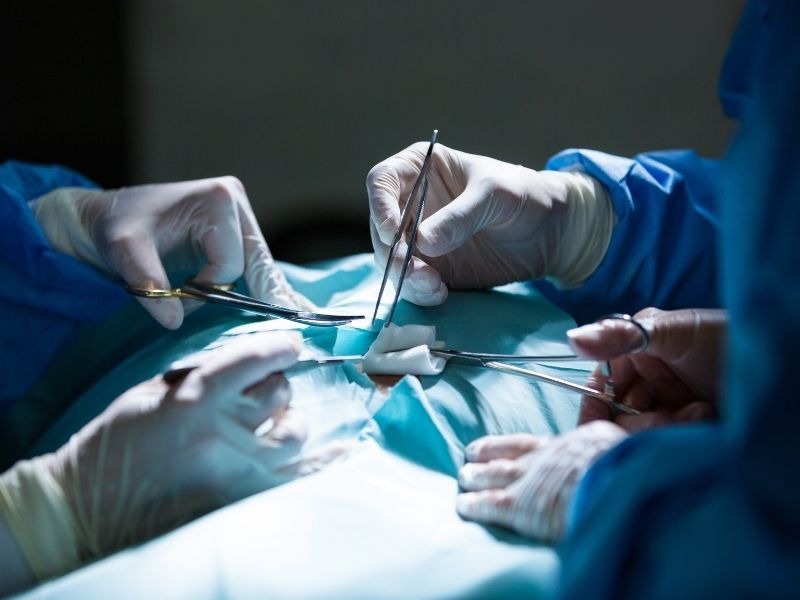
Laparoscopic Reflux Surgery
If the patient experiences reflux complaints such as daily pain, burning, and stomach acid coming into the mouth, if a hiatal hernia and inflammation of the esophagus are diagnosed during examination, and if the patient has been using reflux medication for many years, reflux surgery may be performed using the laparoscopic method.
Specialists recommend reflux surgery more commonly for patients between the ages of 20 and 50. This is because reflux can negatively affect daily life and reduce quality of life, as well as lead to certain digestive system problems.
Reflux surgery is performed using a laparoscopic or minimally invasive method. Under normal circumstances, this surgical procedure requires a 2-day hospital stay and is performed by making small incisions in the abdominal area and accessing the entrance of the stomach through these incisions using cannulas. The procedure is carried out with the assistance of special imaging systems to allow the inside of the stomach to be viewed clearly.
To help prevent complications that may occur after reflux surgery, it is recommended to consult surgeons who are experienced in this field. At the same time, following the doctor’s recommendations completely after surgery also helps reduce the development of risk factors.
